What Is Magic?
Magic is the art of working with energies through focused intention, and whether it heals or harms depends entirely on that intention. Where does this ancient art come from? What separates “white” from “black” magic? And what does modern research say about why rituals change the people who perform them?
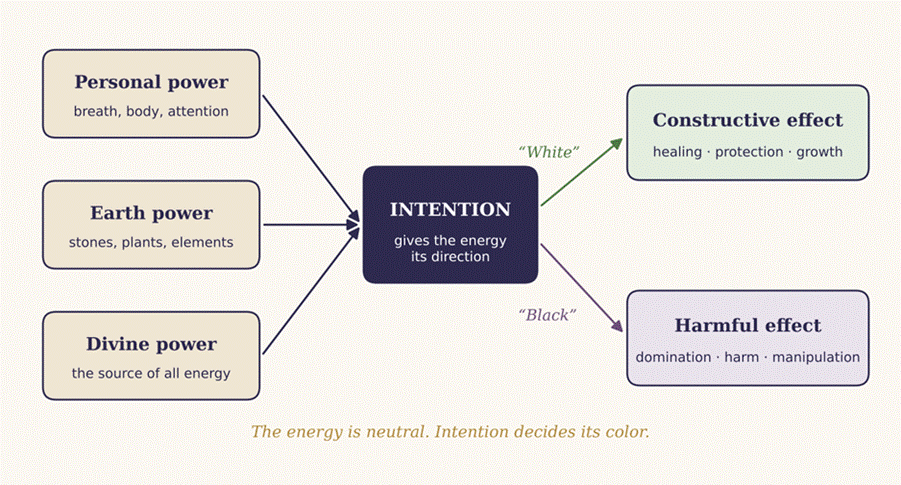
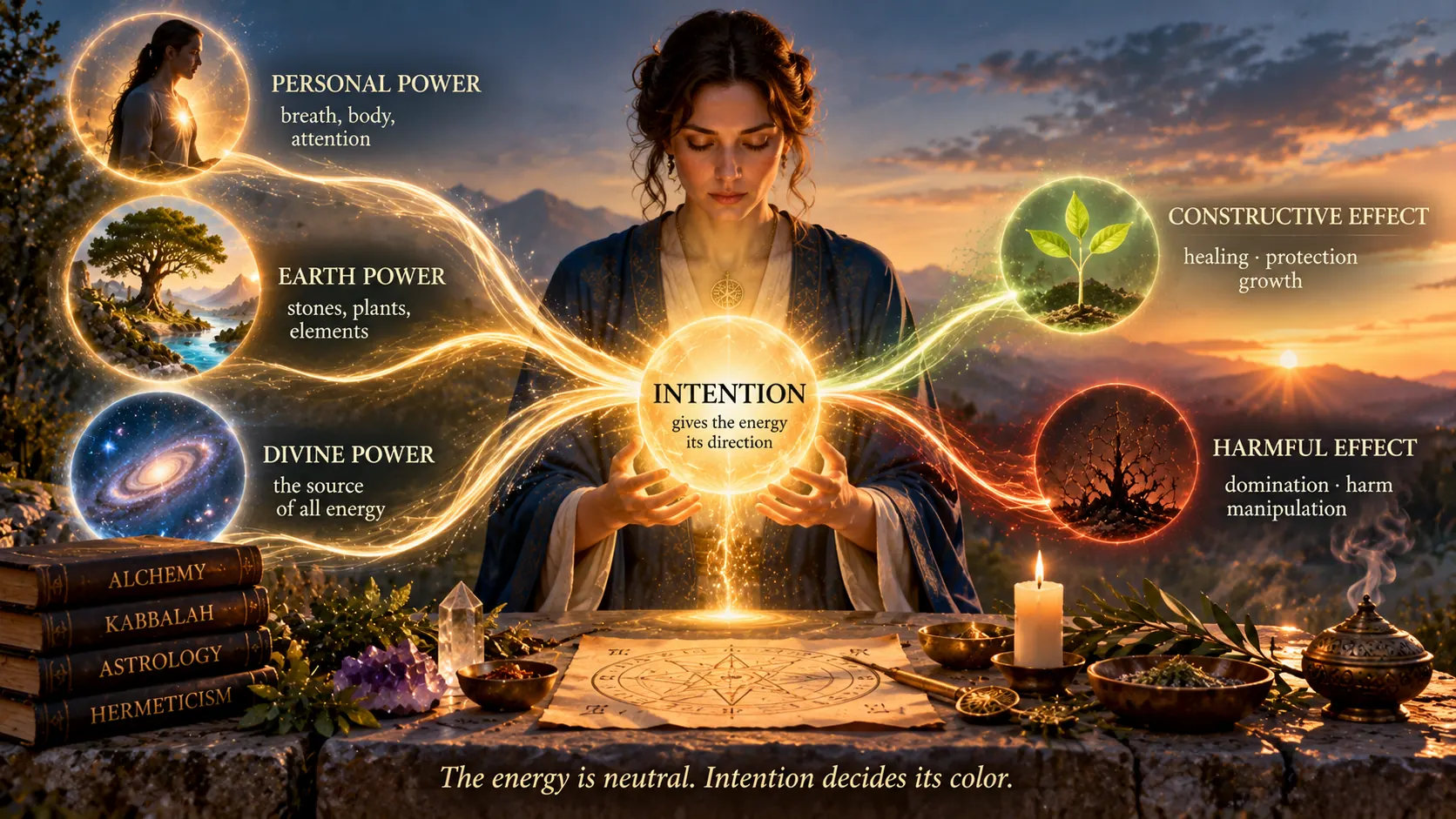
Symbolically, the same energy passes through intention before it takes a direction.
Magic belongs to the great esoteric traditions of the West, alongside alchemy, Kabbalah and astrology. Few words carry so many misunderstandings: for some it evokes stage illusion, for others superstition or danger.
Across the centuries, magic has been described as the art of using energies, whether personal, natural or divine, to produce a chosen effect. The energies themselves are neutral. What makes magic “white” or “black” is the intention behind it, which is why every serious tradition asks that it be handled with prudence.
Understanding magic helps us know ourselves, because it brings to light what we truly want. It also helps us understand the world, because ritual shapes cultures far beyond witchcraft. Let us look at magic from five angles.
Where does magic come from?
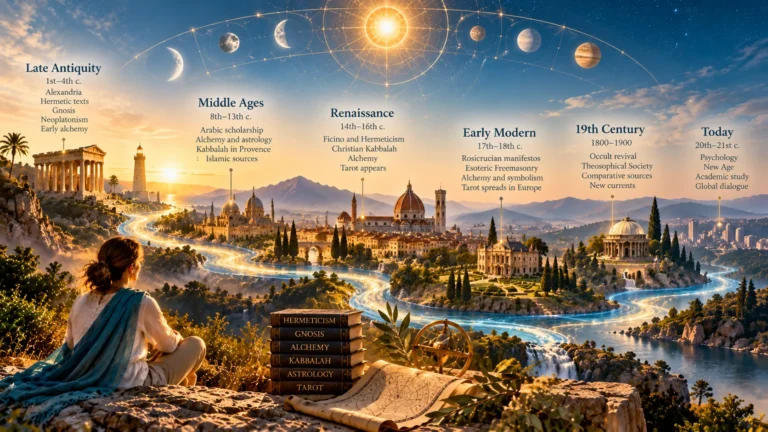
The word comes from the Greek magos, the name given to the priests of ancient Persia. Spells survive on Egyptian papyri and Babylonian tablets, and in the Greek world magic lived side by side with religion and medicine.
During the Renaissance, scholars such as Marsilio Ficino and Pico della Mirandola defended a “natural magic” (magia naturalis) based on hidden correspondences between the stars, plants and the human soul. Pico set it against goetia, the summoning of spirits, which he condemned. In 1533, Cornelius Agrippa gathered this knowledge into a system in his Three Books of Occult Philosophy.
The modern revival came with the Hermetic Order of the Golden Dawn, founded in 1888, and later with Wicca. In his guide for solitary practitioners (1988), Scott Cunningham defines magic as the projection of natural energies and names three sources: personal power, earth power and divine power.
What do magical rituals symbolize?
Symbolically, a magical ritual is a small world in which a person rehearses the change they hope for. The anthropologist James Frazer (1890) identified two principles at work: like produces like, and things that were once in contact remain linked.
Cunningham gives a simple example. Facing a bill he cannot pay, he draws it on paper, crosses it out and visualizes it paid while a green candle burns. Each element carries meaning: green for prosperity, the drawing for the problem, the flame for the energy released.
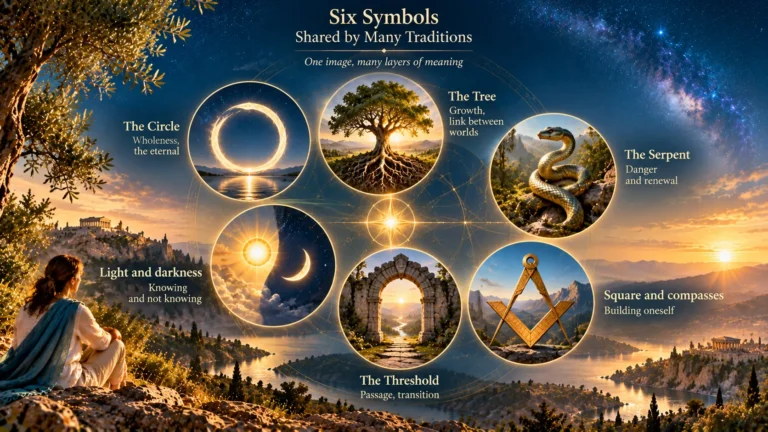
As a symbol, the candle, the circle or the wand has no power of its own. According to Cunningham, tools hold only the power we lend them. The real instrument is the practitioner’s focused attention.
What does magic teach about intention?
In the Western magical tradition, energy is neutral, like electricity: the same current lights a house or starts a fire. “White” magic seeks healing, protection or growth. “Black” magic seeks to dominate, to harm or to bend another person’s will. The difference lies not in the technique but in the intention.
This is why traditions surround magic with rules of prudence. Modern Wicca follows the Wiccan Rede, “An it harm none, do what ye will,” and many practitioners believe that what we send out returns to us. Cunningham states plainly that Wiccans do not practice destructive, manipulative or exploitative magic.
Consider a real-life case. Someone wants a difficult colleague to leave. A manipulative intention would aim at the colleague. A constructive one asks instead for clarity, courage or the right words at the next meeting. The second intention changes the person who holds it, and often the situation as well.
What is the deeper meaning of magic?
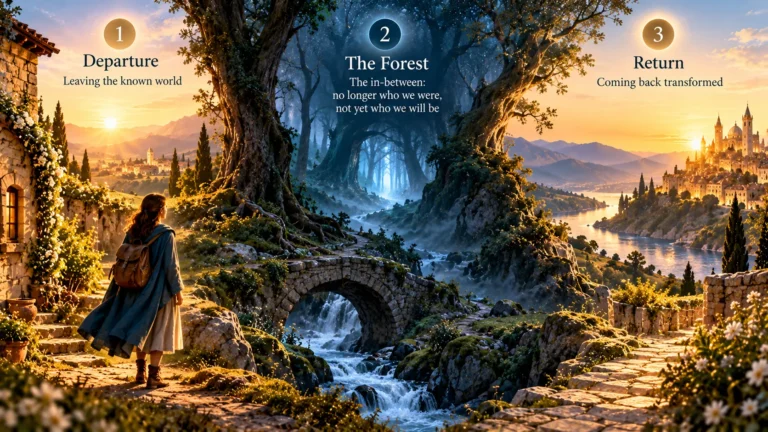
In its deeper reading, magic is less about changing the world than about changing the one who acts. To perform a ritual, one must first know exactly what one wants, then gather thought, image and feeling into a single direction. That alignment is already a transformation.
This is also why prudence matters. Working with energy amplifies what is already inside us, including fear, resentment or the wish for control. Before acting outward, the practitioner is invited to purify the intention, much as the alchemist purifies matter.
One hypothesis holds that consciousness takes part in a shared field of information; if so, an intention would never remain entirely private. This is a hypothesis, not an established result.
What does modern research say about magic?
Science offers no evidence that rituals act directly on external events. Research does, however, show measurable effects on the people who perform them.
Experiments by Alison Wood Brooks and colleagues (2016) found that performing a short ritual before a stressful task reduced anxiety and improved performance, more so when participants were told it was a ritual. Research by Michael Norton and Francesca Gino (2014) found that rituals help people regain a sense of control after a loss.
The anthropologist Tanya Luhrmann (1989), who studied practicing magicians in London, described an “interpretive drift”: through practice, people gradually learn to read events as confirmations of their magic. This is a scholarly interpretation, not an experimental result. These findings echo the traditional emphasis on intention; they do not confirm the existence of magical energies.
In a nutshell
Magic is one of the great esoteric traditions of the West: the art of directing energies, whether personal, natural or divine, toward a chosen effect. The energy is neutral; intention gives it its color. That is why magic must be handled with prudence, and why it always begins with knowing oneself.
Practice: Clarifying Your Intention (7 minutes)
Sit quietly with a sheet of paper and, if you wish, a lit candle.
- Write down one thing you would like to change in your life, in a single sentence.
- Ask yourself three questions. Could this harm anyone, including me? Does it try to bend someone else’s will? Which part of it depends on me?
- Rewrite the sentence so that it concerns only your own attitude or action.
- Read the new sentence aloud slowly, three times, and notice how your body responds.
Which of your two sentences carries more real energy? This is a reflective exercise, not therapy.
Quote
“Magic is the projection of natural energies to produce needed effects.” — Scott Cunningham, Wicca: A Guide for the Solitary Practitioner
Sources
- Brooks, Alison Wood, et al., “Don’t Stop Believing: Rituals Improve Performance by Decreasing Anxiety”, Organizational Behavior and Human Decision Processes, 2016.
- Cunningham, Scott, Wicca: A Guide for the Solitary Practitioner, Llewellyn, 1988.
- Frazer, James George, The Golden Bough: A Study in Magic and Religion, Macmillan, 1890 (abridged edition 1922).
- Luhrmann, Tanya M., Persuasions of the Witch’s Craft: Ritual Magic in Contemporary England, Harvard University Press, 1989.
- Norton, Michael I., and Francesca Gino, “Rituals Alleviate Grieving for Loved Ones, Lovers, and Lotteries”, Journal of Experimental Psychology: General, 2014.
Go deeper
The Awakening Journal — a free reflective workbook to deepen your spiritual intelligence.
Related articles
- What Is Alchemy? (Wisdom & Spirituality)
- What Is Tarot? (Wisdom & Spirituality)
- What Is Consciousness? (Consciousness & Psychology)
By Elizabeth Carrio, MSc in Consciousness and Transpersonal Psychology · Published October 18,2026 · Last updated October 2026 · Disclaimer