What Is Tarot?
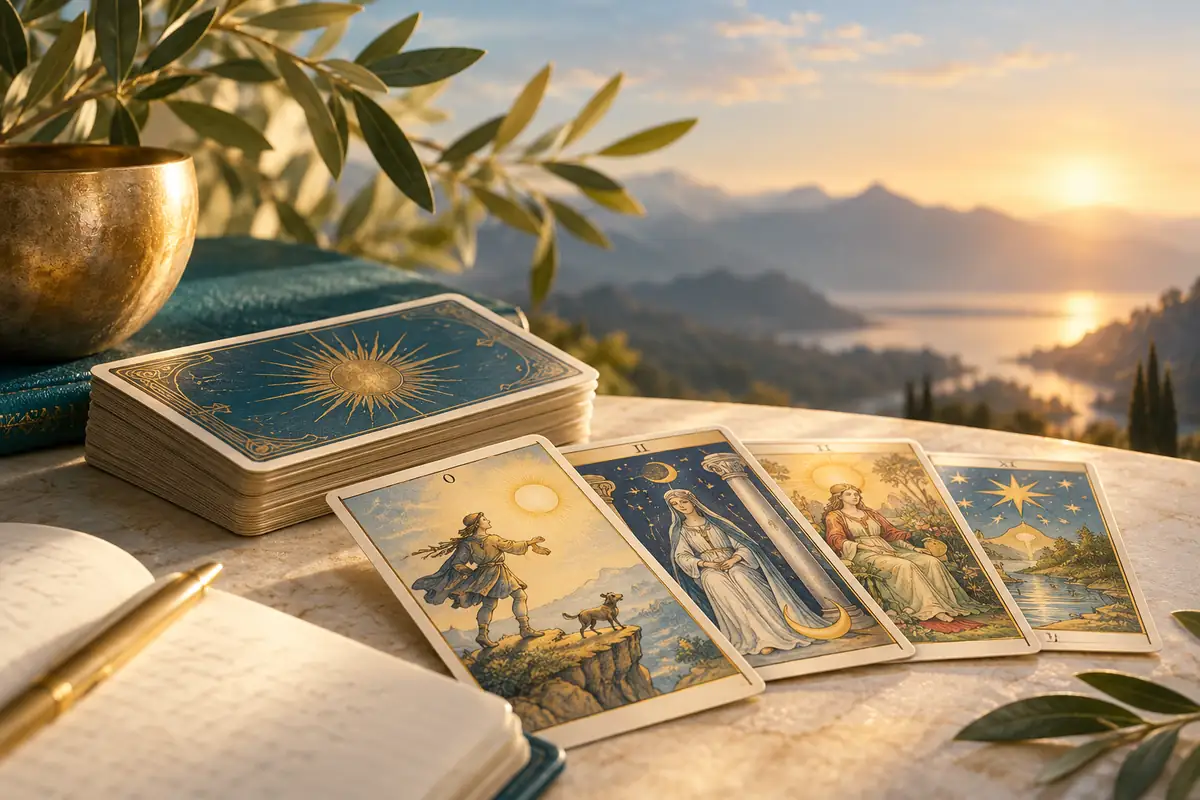
Tarot is far more than a way to tell fortunes: it is a book of images that has travelled through six centuries and can serve as a mirror for knowing yourself. Where does it come from? What do its 22 great cards mean? And how can it help us through the passages of our lives?
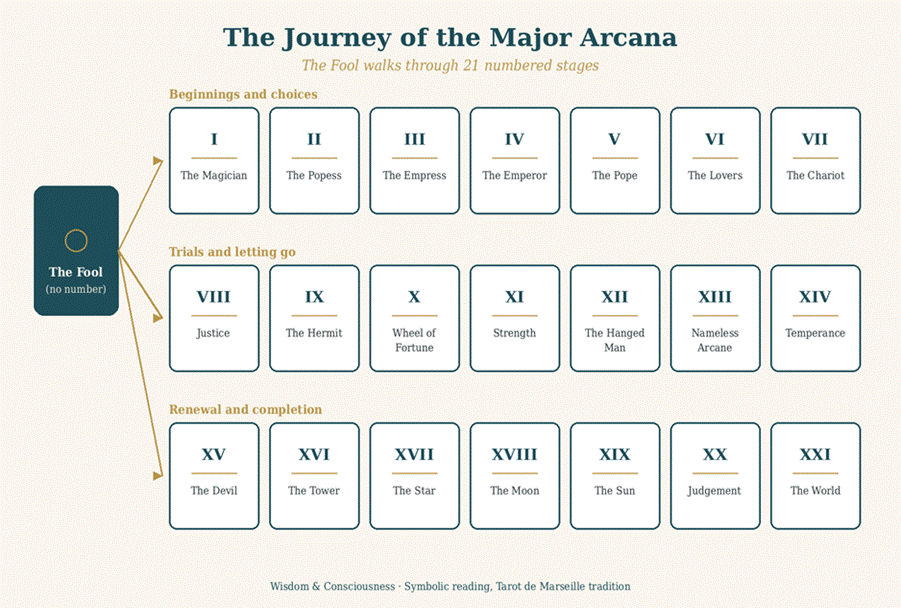
Symbolically, the 22 Major Arcana trace a single journey: the Fool, without a number, walks through 21 stages of life.
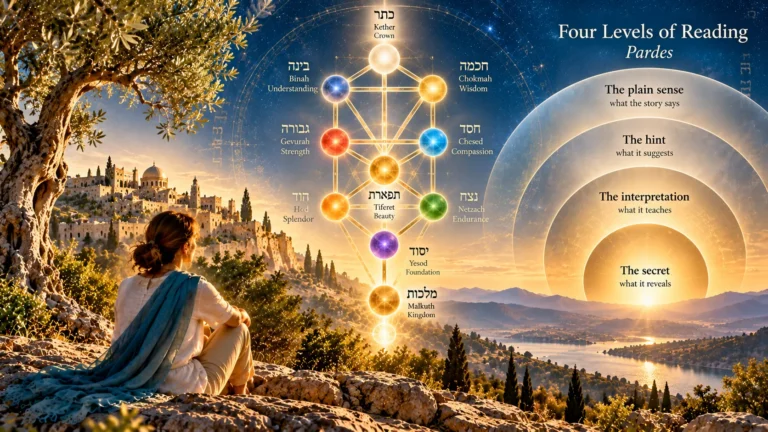
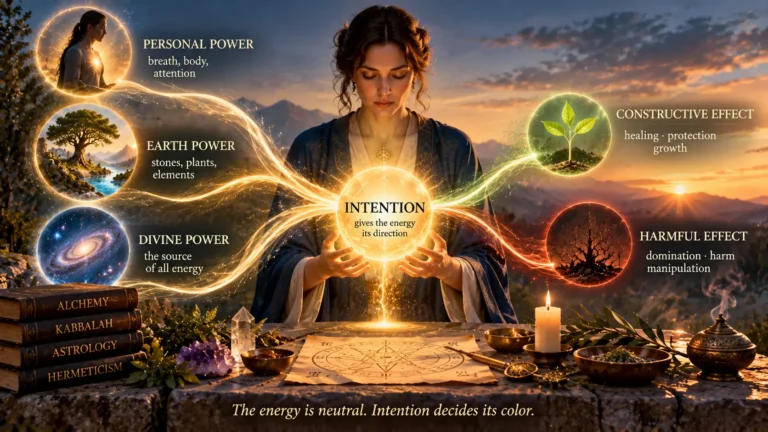
Tarot belongs to the great esoteric traditions of the West, alongside alchemy, Kabbalah and astrology. Its images have reached us carrying a little of humanity’s memory: kings and fools, sun and moon, towers that fall and stars that rise.
Many people think of tarot as a way to predict the future. That is not the tarot I want to talk about here. I see it rather as a mirror: a set of images that helps us look at ourselves more clearly, and at what we are going through, especially in times of change.
Let us see where the tarot comes from, what its images say, and how they can help us see our own lives more clearly..
Where does tarot come from?
We do not know who designed the first tarot, and even the origin of its name remains uncertain. History does tell us where and when the oldest cards appeared: in the courts of northern Italy, in the fifteenth century. Among the most famous are the cards painted around 1450 for the Visconti and Sforza families of Milan, some of which are kept today at the Morgan Library & Museum in New York.
At the time, these cards were used for a refined card game, not for fortune-telling. Their esoteric reading began in 1781, when the French scholar Antoine Court de Gébelin claimed, without evidence, that tarot came from ancient Egypt. The nineteenth century then linked it to Kabbalah, and the twentieth gave us new decks such as the Rider-Waite-Smith. The Tarot de Marseille, printed in France from the seventeenth century, remains the classic reference used here.
What do the 22 Major Arcana symbolize?
A complete tarot has 78 cards. Its heart is made of 22 cards called the Major Arcana; the word “arcana” comes from the Latin arcanus, “secret”. Symbolically, each card holds a small secret about life.
Together, these cards tell the story of a journey. The traveller is The Fool, the only card without a number. He walks through the other 21 cards as through the stages of an inner pilgrimage. Looked at very simply, almost like a child, here is what they show:
- The Fool: a traveller setting out on the road
- I – The Magician: someone beginning, with all their tools on the table
- II – The Popess: quiet inner wisdom
- III – The Empress: creativity and fertility
- IV – The Emperor: structure and authority
- V – The Pope: the teacher, the guide
- VI – The Lovers: the heart and its choices
- VII – The Chariot: willpower moving forward
- VIII – Justice: balance and fairness
- IX – The Hermit: the wise one who walks alone
- X – The Wheel of Fortune: the ups and downs of life
- XI – Strength: gentle inner strength
- XII – The Hanged Man: a pause, seeing things upside down
- XIII – The Nameless Arcane: an ending that makes room for something new
- XIV – Temperance: harmony, like a guardian angel
- XV – The Devil: temptation and what binds us
- XVI – The Tower: a sudden shake-up
- XVII – The Star: hope
- XVIII – The Moon: dreams, fears and illusions
- XIX – The Sun: joy and success
- XX – Judgement: awakening, a new start
- XXI – The World: completion, feeling whole
These first meanings are a good place to start. But the real richness of the tarot is elsewhere.
What does tarot teach about times of transition?
In the tarot tradition, a card is never simply “good” or “bad”: each one holds both light and shadow. The Tower can feel frightening, yet it can also free us from a situation that was no longer right. The Nameless Arcane, often feared as “death”, speaks of an ending that makes room for something new.
Imagine a woman who has just lost her job after twenty years. She draws The Hanged Man. Read as a prediction, the card would only add to her worry. Read as a mirror, it invites a question: what if this forced pause were also a chance to see my life from another angle? The card does not give the answer; it helps her ask a better question. This is the heart of the approach: tarot as a support for self-knowledge, not as an oracle.
What is the deeper meaning of tarot?
At a deeper level, what counts is your own reaction: the feeling, the memory or the idea that comes up when you look at a card. The images work like the symbols of myths and tales: they speak to the part of us that thinks in pictures rather than in words.
The tradition also reads the cards through their numbers. In the nineteenth century, Éliphas Lévi linked the 22 Major Arcana to the 22 letters of the Hebrew alphabet, a correspondence that Kabbalistic psychology still explores today. As a symbol, the Fool stands outside the sequence: he is the traveller who passes through every stage, which is why he has no number. In this way, the tarot becomes a conversation with the deepest part of ourselves.
What does modern research say about tarot?
Let us be clear about the register. There is no scientific evidence that tarot can predict events. Psychology also explains why vague readings often feel accurate: research on the “Barnum effect” (Forer, 1949) has found that people readily accept general descriptions as personally meaningful.
Carl Gustav Jung called meaningful coincidences, such as a card that seems to answer exactly the question you were carrying, “synchronicities” (Jung, 1952). This is a scholarly interpretation, not an experimental result. What research does support is more modest: research on expressive writing (Pennebaker and Beall, 1986) has found that putting feelings into words brings small but measurable benefits for well-being. Used as a prompt for reflection, a card echoes this finding; it proves no doctrine, and it leaves open the wider question of how we can know consciousness.
✦
In a nutshell
Tarot is one of the great esoteric traditions of the West: a set of 78 cards whose 22 Major Arcana tell the journey of a traveller, the Fool. Born as a Renaissance card game, it can be read today as a mirror rather than an oracle, to see more clearly what we are going through.
Practice: The First Look (10 minutes)
Use only the 22 Major Arcana, and keep a notebook at hand.
- Take a quiet moment and think of a question that matters to you, ideally about a change you are living.
- Shuffle the cards and draw one.
- Before reading any meaning, look at the image. What do you notice first? How do you feel?
- Write down a few words, without judging them. This is your first message.
- Then ask yourself: what does this image show me about my situation that I had not seen?
This is a reflective exercise, not therapy.
Quote
“The true Tarot is symbolism; it speaks no other language and offers no other signs.” — Arthur Edward Waite, The Pictorial Key to the Tarot (1911)
Sources
- Michael Dummett, The Game of Tarot: From Ferrara to Salt Lake City, Duckworth, 1980.
- Helen Farley, A Cultural History of Tarot: From Entertainment to Esotericism, I.B. Tauris, 2009.
- C. G. Jung, Synchronicity: An Acausal Connecting Principle, Princeton University Press, 2010 (first published 1952).
- James W. Pennebaker and Sandra K. Beall, “Confronting a Traumatic Event: Toward an Understanding of Inhibition and Disease”, Journal of Abnormal Psychology, 95(3), 1986.
- Arthur Edward Waite, The Pictorial Key to the Tarot, William Rider & Son, 1911.
Go deeper
- The Awakening Journal — a free reflective workbook to deepen your spiritual intelligence.
Related articles
- What Is Alchemy? (Wisdom & Spirituality)
- What Is Kabbalistic Psychology? (Consciousness & Psychology)
- Existential Psychology: Meeting the Great Questions of Life (Consciousness & Psychology)
By Elizabeth Carrio, MSc in Consciousness and Transpersonal Psychology · Published October 9, 2026 · Last updated October 17, 2026 · Disclaimer